beng da wan, 崩大碗
lei gong gen, 雷公根 (in English and Chinese 中英文)
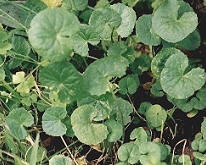 | 崩大碗 Centella Asiatica L. source of picture: Fu Lin Elementary School, Taiwan |
Click here to see uses.
| Pharmaceutical name: 英文药名: | Herba Centella asiatica | ||||||||||||||||||||||||||||||||||||||||||||||||||||||||||||||||||
| Biological name: 拉丁學名: | Centella asiatica, L. Hydrocotyle asiatica L. Hydrocotyle erecta L. F. | ||||||||||||||||||||||||||||||||||||||||||||||||||||||||||||||||||
| Other name: 別名: |
| ||||||||||||||||||||||||||||||||||||||||||||||||||||||||||||||||||
| Pron. in korean: 韓語發音: | byeongpul 병풀 | ||||||||||||||||||||||||||||||||||||||||||||||||||||||||||||||||||
| Pron. in Japanese: 日語發音: | tsubo kusa | ||||||||||||||||||||||||||||||||||||||||||||||||||||||||||||||||||
| Pron. in Cantonese: 粤語發音: | bang1 daai6 wun2 | ||||||||||||||||||||||||||||||||||||||||||||||||||||||||||||||||||
| Common Name:[3] 外文名: | English :Asiatic pennywort, Indian pennywort, Indian navelwort, gotu kola (Sinhalese origin)(英 語) Hindi: ब॒हमामानडुकी, bemgsag, brahma manduki, brahmanduki, brahmi (North India, West India), gotu kola, khulakhudi, mandookaparni, mandukaparni (South India), mandukparni, Thankuni, 北印度語) Malay/Indonesian: daun kaki kuda (Indonesia), gagan-gagan (Java), kerok batok (Java), antanan (West Java)[23], pegaga, pegagan, rendeng (馬來-印尼語) Nepalese:braahamii (brahami), brahambuti, ghodtaapre (ghodtapre), ghorataap (ghortap), kholca ghayn (尼泊爾語) Filipino: takip-kohol, takip-suso(tagalog),(菲利賓語) Punjabi: brahmibuti (印度旁遮普語) Sanskrit: brahamamanduki, brahma manduki, brahmi, divya, jalneem, mandukaparni, mandukparni, nandukparni, thankuni (梵語) Sinhalese: gotu kola (錫蘭語) Vietnamese: Cây Rau Má (越南語) | ||||||||||||||||||||||||||||||||||||||||||||||||||||||||||||||||||
| Distribution: 分佈: | tropical and sub-tropical areas: southern Africa, Madagascar, India, Sri Lanka, Pakistan, Southern part of mainland China, Taiwan, Vietnam, Thailand, burma, Laos, Malaysia, Indonesia and the Philippines. 熱帶與亞熱帶地區: 非洲南部,馬達加斯加,印度,錫蘭,巴基斯丹,中國南部,台灣,越南,泰國,緬甸,老撾國,馬來西亞,印尼,菲利賓等地。 | ||||||||||||||||||||||||||||||||||||||||||||||||||||||||||||||||||
| Properties (characteristics) 性味: | cold, acrid, bitter 寒﹐辛﹐苦。 | ||||||||||||||||||||||||||||||||||||||||||||||||||||||||||||||||||
| Channels (meridians) entered: 歸經﹕ | bladder, spleen, stomach 膀胱﹐脾﹐胃。 | ||||||||||||||||||||||||||||||||||||||||||||||||||||||||||||||||||
| Actions & Indications: |
| ||||||||||||||||||||||||||||||||||||||||||||||||||||||||||||||||||
| Medical Function: 藥理: |
| ||||||||||||||||||||||||||||||||||||||||||||||||||||||||||||||||||
| Chemical ingredients: 化學成份: |
| ||||||||||||||||||||||||||||||||||||||||||||||||||||||||||||||||||
| Dosage: 用量: | 30 ~50 g. 30 ~50 克。 | ||||||||||||||||||||||||||||||||||||||||||||||||||||||||||||||||||
| Samples of formulae: 處方舉例: | For pimples﹕ beng da wan 38 g, mung bean 38 g, salt to taste. Add 2 liters of water. Simmer for 1 hour to make soup. Do not use sugar. For treatment of venous insufficiency: use about 38 g and make into decoction. Use daily for about one to two months. Long term usage may be toxic to liver [13] 治粉刺:崩大碗一兩﹐綠 豆一兩,加少許食 鹽調味煲湯(不可用糖)。 長期服用可能對肝臟有毒。[13] | ||||||||||||||||||||||||||||||||||||||||||||||||||||||||||||||||||
| Warning: 禁忌 | According traditional practice this herb should not be used during pregnancy or during breast feeding. but in different modern studies on animals, it did not show any harm when the herb was given to pregnant animals,[11] In another studies showed no side effect when given to pregnant women. [12] Consuming large amount causes nausea and dizziness. Those with pixu (spleen deficient), should use with care. Traditional usage, in the West, is to use a few leaves with a few slices of ginger added. Long term usage may be toxic to liver [13] Do not over cook. Heating too long can damage the chemical ingredient, that mimic Levodopa. 脾虛 根據傳統懷孕或哺乳期間忌服。但根據現代研究給懷孕的動物服用崩大碗並沒有發現不良反應[11]。 另有報導,此藥對懷孕婦人沒有不良影響[12]。 服用大劑量可致頭暈反胃。 長期服用 可能對肝臟有毒 [13] 不可久煎。如加熱過久其有效成份左旋多巴胺會被破壞。 |

Note: Too much collagen inside the scare tissue may cause collagenoma.
膠原太多可能形成膠原瘤。
[1]Afr J Tradit Complement Altern Med. 2009; 6(1): 9–16.
[2] Angiology. 2001 Oct;52 Suppl 2:S15-18.
[3] http://zipcodezoo.com/Plants/C/Centella_asiatica/ [4] Nalini k, Aroor AR, karanth kS, et al. Effect of Centella asiatica fresh leaf aqueous extract on learning and memory and biogenic amine turnover in albino rats. Fitoterapia. 1992;63:232-237.
[5] J Clin Psychopharmacol. 2000 Dec;20(6):680-684.
[5] http://www.ncbi.nlm.nih.gov/pubmed/16105244 [6] http://www.ncbi.nlm.nih.gov/pubmed/16105244 [7] J Ethnopharmacol. 2006 Nov 6; [Epub ahead of print]
[8] J Alzheimers Dis. 2008 Apr;13(3):341-9.
[9] Phytother Res. 2009 Jan;23(1):14-9.
[10] Angiology. 1990;41: 533-540.
[11] Ann Plast Surg. 1979;3:13-21.
[12] Ann Obstet ginecol Med Perinat. 1985;106:337-341 [13] Rev Esp Enferm Dig. 2005 Feb;97(2):115-24.
[14] J Toxicol Sci. 2010;35(1):41-7.
[15] Ann Pharm Fr. 1995;53(1):38-42.
[16] Exp Dermatol. 2008 Nov;17(11):946-52. Epub 2008 May 21.
[17] Phytother Res. 2007 Dec;21(12):1142-5.
[18] 中國老年學雜誌﹒2006,26(10):1363-1365 [19] The Journal of Pharmacy and Pharmacology. 2005, 57(9): 1221-1229 [20] 中醫藥學報,2001,29(6):53-54 [21] 中國醫藥報, 2006-11-17 [22] Phytother Res. 1999 Feb;13(1):50-4.
[23] Food Chemistry, 121 (2010), 12311235 Further reading on ingredients:
http://www.paper.edu.cn/index.php/default/famous/famous_detail/2087/
http://www.tuftsmedicalcenter.org/apps/Healthgate/Article.aspx?chunkiid=21763#ref16