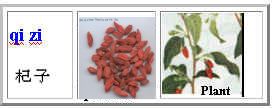
gou qi zi (fruit) 枸杞子 (in English and Chinese 中英文)
di gu pi (bark of the plant) 地骨皮
gou qi ye (leaves of the plant) 枸 杞葉
Translated and edited by: Joe Hing Kwok Chu
 |
Pharmaceutical name: 英文藥名 | Fructus Lycii | ||||||||||||||||||||||||||||||||||||||||||||||||||||||||||||||||||||
Biological name: 拉丁文學名 | Lycium barbarum L.or L chinense Mill | ||||||||||||||||||||||||||||||||||||||||||||||||||||||||||||||||||||
Pron. in Japanese: 日語發音﹕ | kukoshi | ||||||||||||||||||||||||||||||||||||||||||||||||||||||||||||||||||||
Pron. in Korean: 韓語發音﹕ | kugicha | ||||||||||||||||||||||||||||||||||||||||||||||||||||||||||||||||||||
粵音﹕ | gau2 gei2 zi2 | ||||||||||||||||||||||||||||||||||||||||||||||||||||||||||||||||||||
Common Name: 英文名: | Chinese wolfberry fruit, lycium fruit, goji berries, desert-thorn, Christmas berry, wolfberry , matrimony vine, and Duke of Argyll's tea tree. | ||||||||||||||||||||||||||||||||||||||||||||||||||||||||||||||||||||
Distribution: 分佈: | Ninxia, Gansu, Qinghai, Inner Mongolia (L. barbarum), Hebei (L. chinense) 寧夏﹐甘肅﹐ 青海﹐內蒙 (L. barbarum), 河北 (L. chinense) | ||||||||||||||||||||||||||||||||||||||||||||||||||||||||||||||||||||
Properties (characteristics): 性味: | sweet, neutral 甜﹐ 平。 | ||||||||||||||||||||||||||||||||||||||||||||||||||||||||||||||||||||
Channels (meridians) entered: 歸經: | liver, lung, kidney 肝﹐肺﹐腎。 | ||||||||||||||||||||||||||||||||||||||||||||||||||||||||||||||||||||
Actions & Indications: 主治: | nourishes and tonifies the liver and kidney; alleviates sore back, leg, and stomach; improves night vision, blurred vision, diabetes, premature white hair and consumption. The leaves and bark can be used for hot flashes and cough due to consumption. The leaves can be used for tonifying deficiency and to get rid of anxiety, pain in joints and skin, and the toxin from boils. 有補腎,滋陰,養肝, 明目,益氣等功 效。適用於腎虧遺精,腰膝酸軟,頭暈目眩,兩眼昏花,糖尿病,鬚髮早白,虚勞。其葉與皮可用於陣 熱,勞咳。葉亦可用於補虚,去煩,關節或皮膚疼痛,瘡毒。 | ||||||||||||||||||||||||||||||||||||||||||||||||||||||||||||||||||||
Medical Function: 藥理: | Medical Function:
藥理:
| ||||||||||||||||||||||||||||||||||||||||||||||||||||||||||||||||||||
Chemical ingredients: 化學成份: | , quercetin-rhamno-di-hexoside was present in largest mass fraction (438.6microg/g), followed by quercetin-3-O-rutinoside (281.3microg/g), dicaffeoylquinic acid isomers (250.1microg/g), chlorogenic acid (237.0microg/g), quercetin-di-(rhamnohexoside) (117.5microg/g), quercetin-di-(rhamno)-hexoside (116.8mug/g), kaempferol-3-O-rutinoside (97.7microg/g), isorhamnetin-3-O-rutinoside (72.1microg/g), p-coumaric acid (64.0microg/g), caffeic acid (23.7microg/g) and vanillic acid (22.8microg/g).[2]
| ||||||||||||||||||||||||||||||||||||||||||||||||||||||||||||||||||||
Dosage: 用量: | root, bark and fruit: 6 to 15 g per day. Leaves are used as a vegetable. 地骨皮,杞子:6 ~15克 葉作菜用。 | ||||||||||||||||||||||||||||||||||||||||||||||||||||||||||||||||||||
Samples of formulae: 處方舉例: | For spermatorrhea: gou qi zi 6 g, wu wei zi 2 g, rou cong rong 2 g, ren sheng 2 g, fu ling 3 g, shu di huang 3 g, da zao 3 g, sheng jiang 2 g, gan cao 2 g. Cook in 600 cc of water and simmer to 300 cc. Make into 3 servings per day. (source He Han Yao Yin Yong Fang) For improving sperm count and sperm activity: wu zi yan zong wan For premature white hair: gou qi zi 15 g, rice 30 g. Make into porridge. Use daily. (folk formula) For dry eyes and blurry eye sight: retinitis, glaucuma, geriatric cataract, optic nerves atrophy, detachment of retina, sequela of concussion, high blood lipids: qi ju di huang wan | ||||||||||||||||||||||||||||||||||||||||||||||||||||||||||||||||||||
Modern Research: 現代研究: | neuro-protective effect 保護神經系统 作用 Protective effect of Lycium barbarum on the cancer drug, Doxorubicin-induced Cardiotoxicity [1]
| ||||||||||||||||||||||||||||||||||||||||||||||||||||||||||||||||||||
Caution: 禁忌﹕ | Not to use in cases external heat, (like cold or flu, swelling with inflammation), spleen deficient (pixu) with dampness and loose stool or diarrhea. An increased INR value was noted with concurrent use of warfarin and qi zi.Thus, combination of L. barbarum L. and warfarin should be avoided. [1] 外感實 熱﹐脾 虛濕滯及腸滑便溏者忌服。 發現與華佛林(warfarin) 同用 INR 值會增高。所以两者不應同用。[1] | ||||||||||||||||||||||||||||||||||||||||||||||||||||||||||||||||||||
Quality: 品質鑒別﹕ | The better quality qi zi is from Zhong Ning Area. Quality identification:
National Quality Inspection Agency of China has banned the use of sulfur dioxide to preserve the fruit. Addendum: Carefully examine under the light to see if there is white crystal powder . If so, it may be soaked in alum water (harmful to health); or smoked with sulfur. The white powdery crystal may be the sublimation of sulfur or the residue of alum. If the berries have been soaked in alum water, they feel stiff and the taste can be sour, astringent. The side effects of alum (aluminum potassium sulfate) are osteoporosis, bone loss and memory loss. In China, gou qi zi from Ningxia province is considered the best. There are merchant selling Xizang (Tibetan) gou qi zi and Xinjiang gou qi zi as Ningxia gou qi zi to fetch better prices. 中 寧枸杞辨認七法: 中寧枸杞子辨認资 料来源:摘自“美食導報”2002﹐11﹐15 國 家 質 檢 總 局 嚴 禁 用 硫 磺 加 工 。 補充﹕在 光照下,小心察看杞子上有無附著白色的結晶。那可能是浸過明礬水(對健康有害)﹔或是熏硫磺時﹐部份硫磺昇華結晶 於杞 子上。 浸過明 礬水的﹐觸 手會有僵硬﹐乾澀的感 覺﹔ 如輕舔藥材表面,會有酸﹐澀的味道。明礬 (硫酸鋁鉀(鉀鋁礬))的副作用可使鈣質與磷質流失而導致骨骼疏鬆,記憶減退。 為了縮短晾晒時間,有些小農場往往用超飽和的濃鹼水 浸泡枸杞,然後再加晾晒。這樣處理過的枸杞看來色澤鮮紅,十分誘人,但其營養萬分已大大降低。用鹼水處理過的枸杞有苦澀感。 有些藥商把價錢較便宜的西藏枸杞子與新疆枸杞子當作寧夏枸杞子賣,以取得較高價錢。 看關於二 氧化硫處理過的乾貨。 |
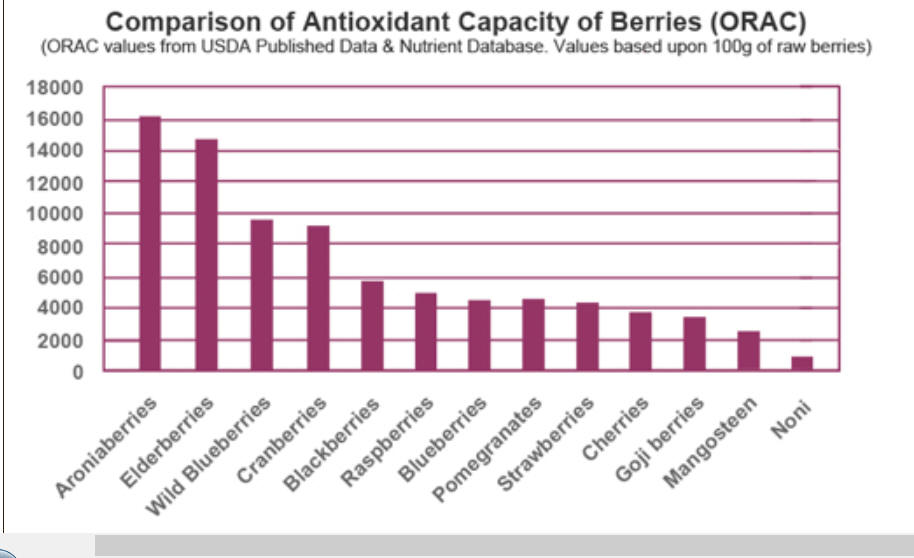
Note: the variety which is popularly sold in nurseries and grown in America is Lycium exsertum A. Gray. The fruit are not as long as Lycium barbarum which is grown in western part of China and is mainly used in traditional Chinese medicine. Usually the plants sold in America are labeled incorrectly as Lycium barbarum.
在美國一般在苗圃所賣的和一般所種的是 Lycium exsertum A. Gray。 這種杞子比起寧夏杞子較短。一般在美國賣的枸杞子樹苗都錯誤地標為 Lycium barbarum.
[1]Ann Pharmacother. 2001 Oct;35(10):1199-201.
[2]J Pharm Biomed Anal. 2010 Feb 5;51(3):549-56. Epub 2009 Sep 11.
[3] Exp Gerontol. 2005 Aug-Sep;40(8-9):716-27.
The side effect of alum (aluminum potassium sulfate
It can also depletes phosphorus in the normal body, and long-term use can bring phosphorus down to an unnaturally low l
中 文 化 學 成 份 來 源 ﹕ 浙 江 中 醫 大 學 。
Lutein and zeaxanthin help protect the eyes from damaging sunrays. As people get older, these carotenoids decline in the eyes, and may cause macular degeneration.
Note: Gou qi leaves are usually sold in Chinese grocery market as vegetable. The fresh leaves can be used as soup vegetable.
More info in Chinese. 中文網站。.
The following study has been published.
Neuroprotective effects of anti-aging oriental medicine
Lycium barbarum against beta-amyloid peptide neurotoxicity.
Yu MS, Leung SK, Lai SW, Che CM, Zee SY, So KF, Yuen WH, Chang RC.
Laboratory of Neurodegenerative Diseases, Department of Anatomy,
The University of Hong Kong, Hong Kong.
As aged population dramatically increases in these decades, efforts should be made on the intervention for curing age-associated neurodegenerative diseases such as Alzheimer's disease (AD). Natural plant extracts of Lycium barbarum are well-known to exhibit anti-aging effects. We therefore hypothesized that they exhibit neuroprotective effects against toxins in aging-related neurodegenerative diseases. In this study, we aimed to investigate whether extracts from L. barbarum have neuroprotective effects against toxicity of fibrillar Abeta(1-42) and Abeta(25-35) fragments. Primary rat cortical neurons exposed to Abeta peptides resulted in apoptosis and necrosis. Pre-treatment with extract isolated from L. barbarum significantly reduced the release of lactate dehydrogenase (LDH). In addition, it attenuated Abeta peptide-activated caspases-3-like activity. The extract elicited a typical dose-dependent neuroprotective effect. Effective dosage of this extract was wider than that of a well-known western neuroprotective medicine lithium chloride (LiCl). We have further examined the underlying mechanisms of the neuroprotective effects. In agreement with other laboratories, Abeta peptides induce a rapid activation of c-Jun N-terminal kinase (JNK) by phosphorylation. Pre-treatment of aqueous extract markedly reduced the phosphorylation of JNK-1 (Thr183/Tyr185) and its substrates c-Jun-I (Ser 73) and c-Jun-II (Ser 63). Taken together, we have proved our hypothesis by showing neuroprotective effects of the extract from L. barbarum. Study on anti-aging herbal medicine like L. barbarum may open a new therapeutic window for the prevention of AD.
Note:
Abeta peptide (amyloid β peptides) is the precursor of β-amyloid which is toxic for the neurons.
Lactate dehydrogenase (LDH) is an enzyme that catalyzes the inter-conversion of lactate and pyruvate. It is abundant in kidney, skeletal muscle, liver and myocardium and in other tissues. It appears in elevated concentrations when these tissues are injured.
see Alzheimer's disease.
<<中國中醫藥科技>>2004年 第11卷 第02期
作者: 張穎, 張立睦, 周紅英, 齊永秀, 蘇雪惠,
期刊-核心期刊 QCode : zgzyykj200402018
目的:測定不同產地枸杞子中黃酮的含量.方法:以蘆丁為標准品,用分光光度法測定寧夏,河北,內蒙,山東枸杞子中黃酮的含量.結果:其平均含量分別為4853.Omg/kg,4993.3mg/kg,3613.0mg/kg,2680.0mg/kg;回 收率為100.9%;RSD為1.21%.結論:不同產地枸杞子中黃酮含量存在一定差異.
蘆丁 Rutin
異名:芸香甙 ,維生素 P, 紫槲皮甙, Rutoside , Violaquereitrin
化學名: 4H-1-Benzopyran-4-one ,3 -[(6-O-(6-deoxy-α-L-mannopyranosyl)-β-D- glucopyranosyl ]oxy]-2-(3,4-dihydroxyphenyl)-5,7-dihydroxy-
分子式及分子量: C27H30O16:610.51